Explore the guide library · Router buying guides
Verify file sharing, access controls, drive support and your backup plan before using a router as shared storage.
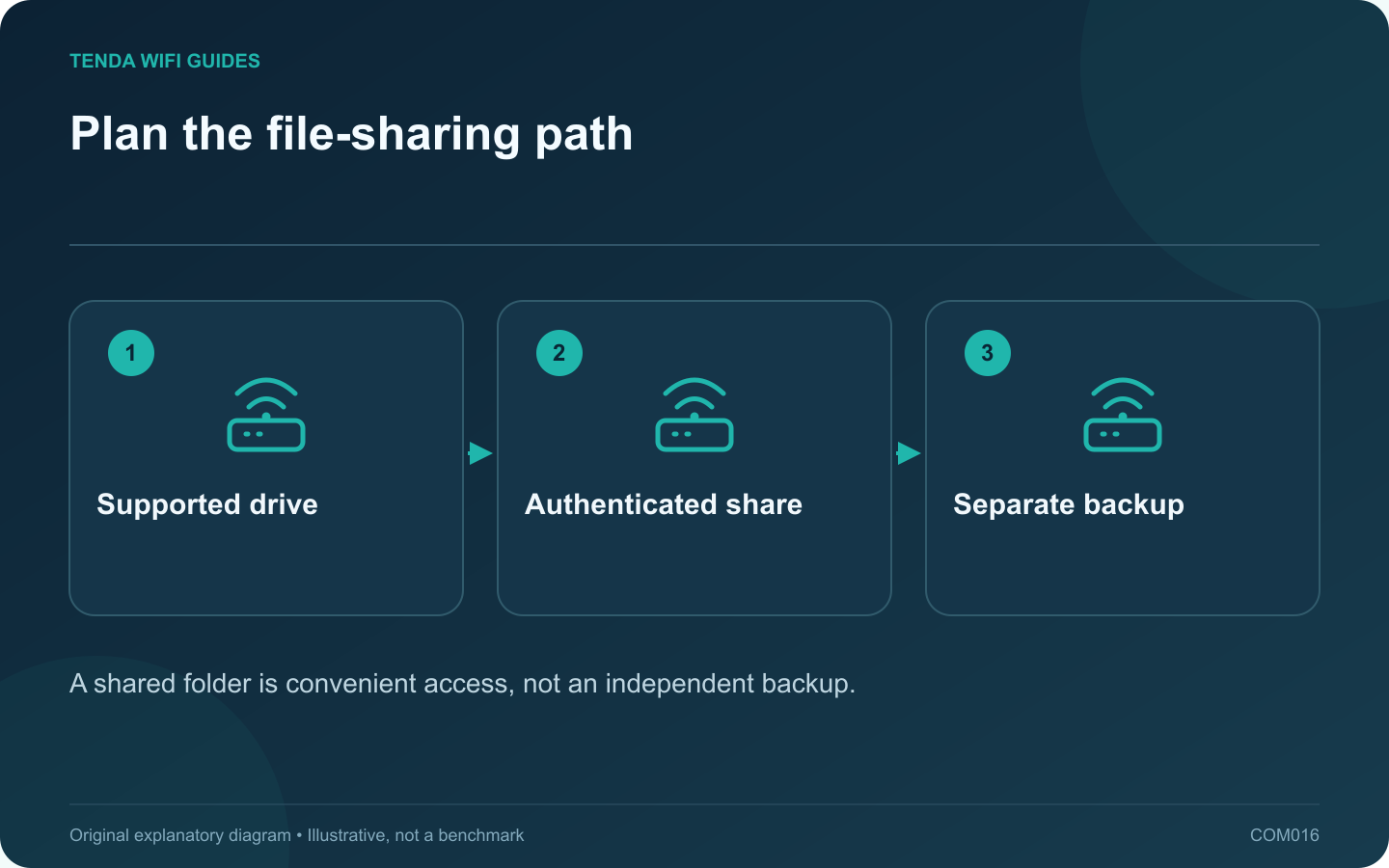
A USB socket does not tell you everything about a router’s storage features. Before buying, verify that the exact model can share the type of drive and files you need. Some USB ports serve other functions, and supported storage behavior can vary between models and firmware.
Start with a small requirements sheet
Write down the drive format, capacity, power requirement and client devices. Add whether each person needs read-only or write access. If the current drive contains the only copy of important files, make an independent backup before attaching it to new equipment or changing its format.
TP-Link’s current sharing guidance distinguishes local file access from remote access and recommends authentication. Its Deco instructions also restrict USB sharing to supported models. Use those checks as a prompt to inspect your exact router manual, rather than applying a screenshot from another product.
Test permissions with an ordinary account
- Connect a spare or backed-up drive containing a test folder.
- Enable local sharing and set a dedicated access credential if the product supports it.
- Use a normal client account to open the test folder.
- Try creating and deleting a disposable file only where write access is intended.
- Check that an unauthorized household or guest device cannot browse the protected share.
Keep internet exposure out of the first setup
A successful local share does not require exposing file services directly to the internet. Leave remote sharing disabled while validating the local workflow. If remote access is essential, evaluate a supported secure access method separately and review who can reach it.
Choose by the actual workload
For occasional local document access, a supported router share may be adequate. For multiple users, dependable backups, snapshots or storage expansion, compare a dedicated NAS as a separate product class. Test your own file sizes and client mix before relying on the router for regular work.
Finally, verify safe removal and reconnect behavior. The convenient place to plug in a drive is not automatically the best place to keep its only copy.
Sources and editorial notes
Sources checked 8 October 2026. Independent guidance and original illustrations; product comparisons use published specifications rather than hands-on benchmarks. Check the exact model, revision and regional documentation before changing settings.